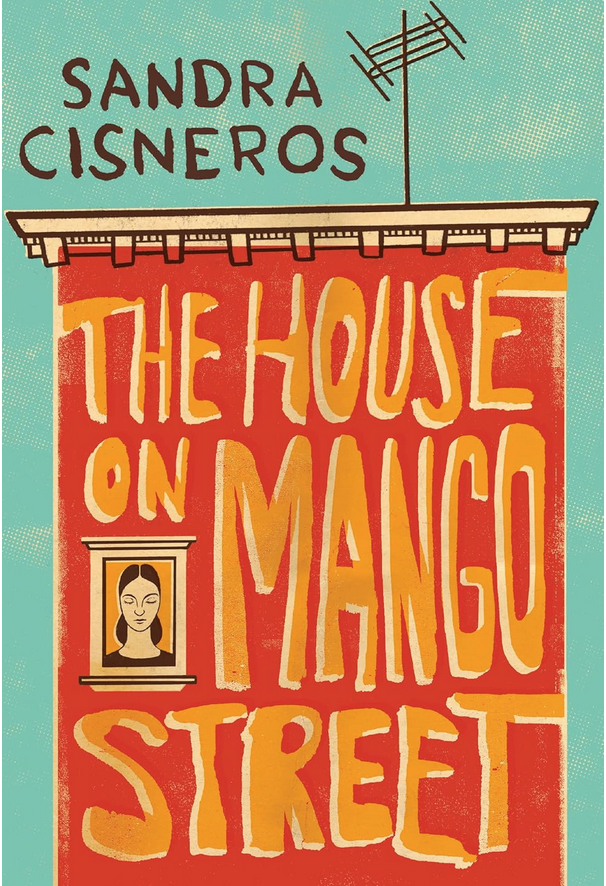
Author: Sandra Cisneros
Publisher & Date: Vintage, 3 Apr 1991
Page Count: 110 pages
ISBN: 978-0679734772
Age/Reading Level: Ages 11-13/Grades 6-8
Representation: Hispanic main characters
Other Information:
Book Information
The House on Mango Street is one of the most cherished novels of the last fifty years. Readers from all walks of life have fallen for the voice of Esperanza Cordero, growing up in Chicago and inventing for herself who and what she will become. “In English my name means hope,” she says. “In Spanish it means too many letters. It means sadness, it means waiting.”
Told in a series of vignettes—sometimes heartbreaking, sometimes joyous—Cisneros’s masterpiece is a classic story of childhood and self-discovery and one of the greatest neighborhood novels of all time. Like Sinclair Lewis’s Main Street or Toni Morrison’s Sula, it makes a world through people and their voices, and it does so in language that is poetic and direct. This gorgeous coming-of-age novel is a celebration of the power of telling one’s story and of being proud of where you’re from.
Challenges & Bans
This book received challenges for it’s depictions of themes such as sexuality, domestic violence, poverty, racial identity, and social issues. It was also perceived as promoting ethnic resentment and portrayed these ethnic studies as being “Un-American”.
Specific Challenges*:
Tucson High School, Tucson Unified School District, Pima County, Arizona (2010): Members of the Arizona State House of Representatives brought forth HB 2281 with the aim of removing Mexican-American studies from Tucson schools. One of the reasons the bill writers gave for dismantling Tucson’s Mexican-American studies program was that the curriculum “promote[s] resentment toward a race or class of people,” and “advocate[s] ethnic solidarity instead of the treatment of pupils as individuals.” Other challengers of the book (and others up for removal) also alleged that they would “promote the overthrow of the United States government”, despite the main characters of this book never speaking about government at all. HB 2281 passed through the governor’s office and the law took effect December 31st, 2010. The law would remain in effect until August of 2017, when a federal judge struck it down ruling that HB2281 had violated students’ constitutional rights, and made clear that the state showed discriminatory intent when shutting down the program, and stated in the ruling “Both enactment and enforcement were motivated by racial animus.” This case was still being adjudicated in the court system in 2013 and filings as recently as 2017. The ultimate ruling was a mixed bag of positive and negative when the case went before the US Ninth Circuit Court of Appeals. This ruling can be viewed hhttps://cdn.ca9.uscourts.gov/datastore/opinions/2015/07/07/13-15657.pdfere.
Saint Helens School District, Columbia County, Oregon (2012): The Saint Helens School Board announced it’s reconsideration of at number of titles, including this book, after receiving challenges that cited “concerns for the social issues presented,” and “content too mature for this age group.” A grassroots campaign led by a former student in the district gathered support from previous and current students who had the opportunity to have this book taught in the class curriculum, and together they presented letters in support of the book that cited the benefits they felt they had gained in the process. The book was reinstated to the curriculum.
*Source: This Book is Banned webpage, unless otherwise linked/notated
Awards & Accolades
American Book Award 1985
